
How Surgical Instruments Are Manufactured: From Raw Steel to Operating Room
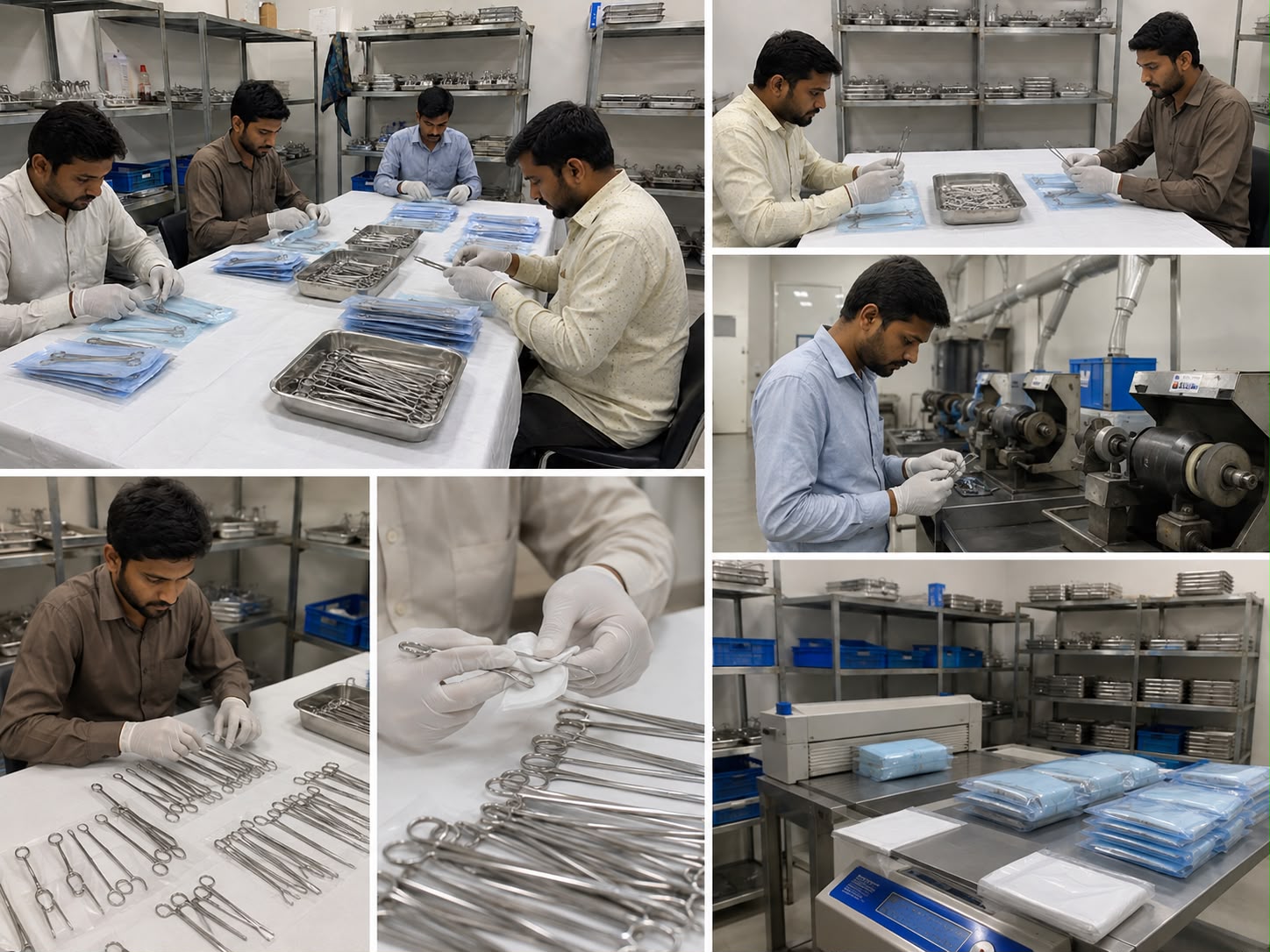
- Drop forging creates dense, high-strength structural grain in surgical stainless steel.
- Micrometer CNC milling guarantees jaw alignment and precise ratchet interlocking.
- Ultrasonic cleaning & chemical passivation build a protective chromium oxide anti-corrosion barrier.
### Introduction
Surgical instruments are the extension of a surgeon's hands. Achieving the precision, balance, and reliability demanded in operating rooms requires a multi-stage manufacturing process blending advanced metallurgy, CNC engineering, and traditional artisan handcrafting.
1. Steel Forging & Heating
The manufacturing process begins with certified surgical-grade stainless steel rods (typically AISI 410 or AISI 420). The steel bars are heated to over 1100°C and shaped under heavy drop-forge presses using precision steel dies. Drop forging ensures high structural strength and optimal grain structure necessary to withstand repeated stress.
2. Annealing & Machining
After forging, the raw instrument blanks undergo annealing to soften the metal for precision machining. Using high-precision CNC machines, artisans cut ratchets, teeth, box joints, and serrations with tolerances measured in fractions of a millimeter.
3. Heat Treatment & Hardening
To achieve the ideal balance between hardness (to hold sharp edges) and ductility (to prevent snapping), instruments are heat-treated in vacuum furnaces followed by rapid quenching and tempering.
4. Hand Assembly & Articulation
No automated machine can replace the human eye when aligning instrument jaws. Skilled artisans hand-fit joint rivets, align teeth, and adjust tension until scissors cut seamlessly along their entire blade length and forceps lock firmly.
5. Passivation & Corrosion Protection
To comply with international surgical standards, instruments undergo nitric or citric acid passivation. This chemical process removes free iron particles from the surface and forms a protective chromium oxide layer that prevents rusting during steam autoclave sterilization.
Conclusion
At Lykaven Medical Instruments, every tool passes through rigorous multi-point quality inspections before being dispatched to healthcare providers worldwide.
Need Custom Medical Instrument Manufacturing?
Our engineering team can assist you with custom steel selection, CAD pattern design, and private label packaging.
Explore OEM Services