
Essential Sterilization & Care Guide for Medical Instruments
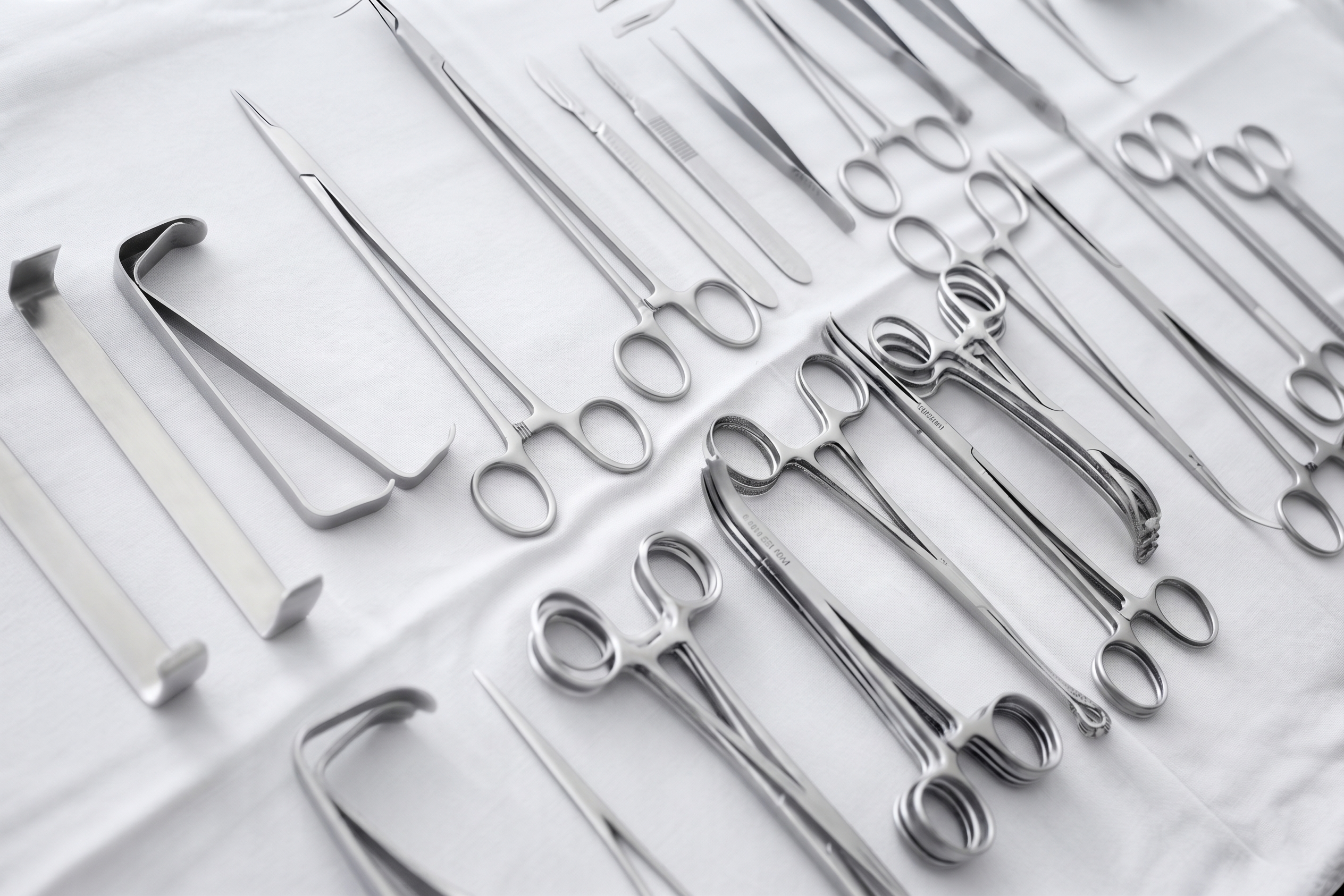
- Rinse instruments immediately post-op to prevent blood drying in box joints.
- Use pH-neutral (pH 7) enzymatic detergents to protect the passivation layer.
- Lubricate moving joints with water-soluble instrument milk prior to autoclaving.
Proper care and maintenance preserve instrument alignment, sharp edges, and corrosion resistance for decades.
1. Pre-Rinsing & Decontamination
Immediately after use, rinse instruments under cool water to remove blood and tissue residue. Never let organic matter dry inside ratchets or serrated jaws.
2. Ultrasonic & Manual Cleaning
Use pH-neutral enzymatic cleaning solutions. Avoid harsh industrial bleach or abrasive pads that scratch the protective chromium oxide film.
3. Joint Lubrication
Apply medical-grade, water-soluble instrument lubricant ("instrument milk") to all moving joints, hinges, and ratchets before autoclaving.
4. Steam Autoclaving
Autoclave instruments in the open/unlocked position to allow steam penetration into box joints and prevent stress fractures during thermal expansion.
Need Custom Medical Instrument Manufacturing?
Our engineering team can assist you with custom steel selection, CAD pattern design, and private label packaging.
Explore OEM Services